The largest religious monument on earth was built for Vishnu. Its galleries carve the Ramayana, the Mahabharata and the churning of the ocean into sandstone.
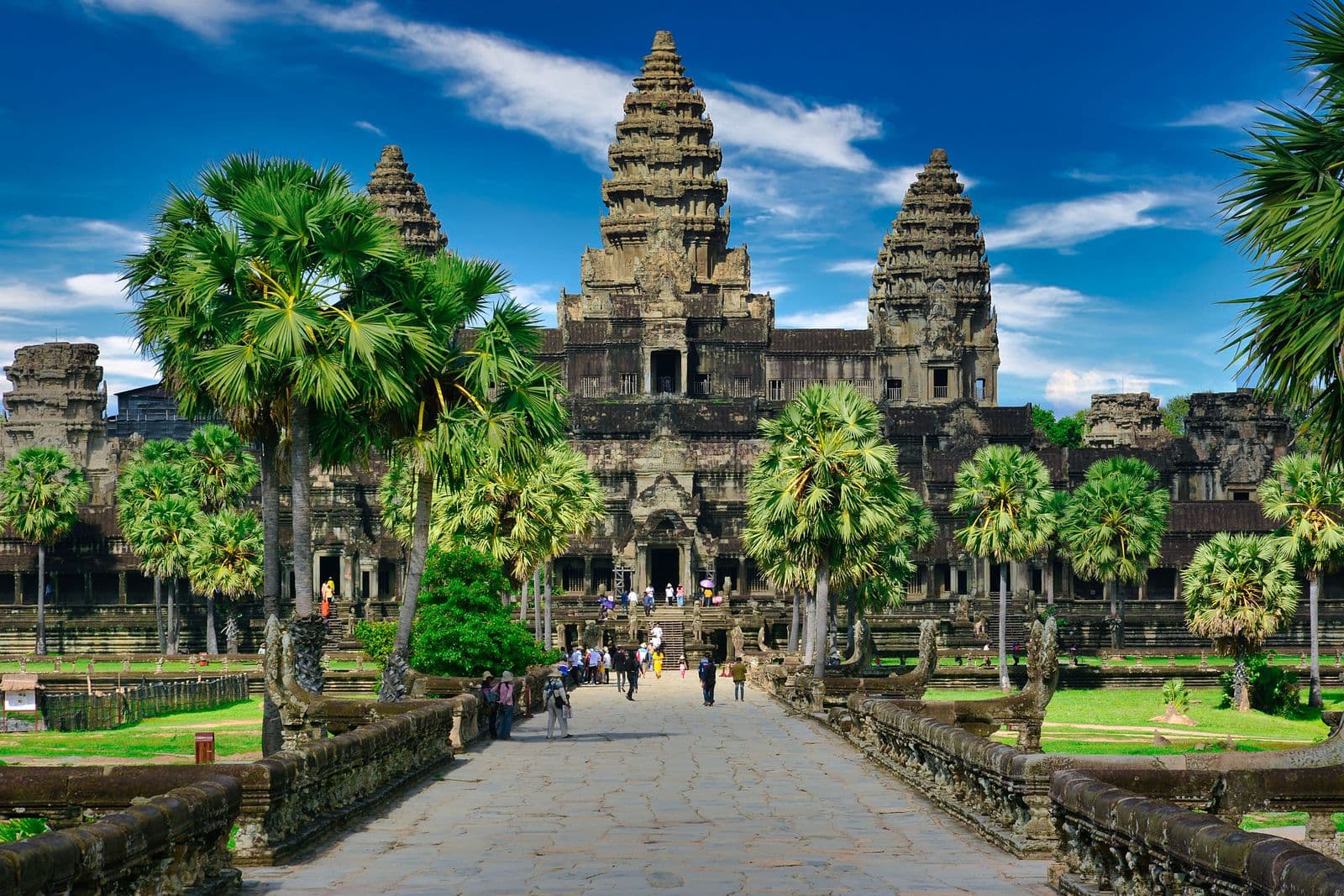
In the early twelfth century, the Khmer king Suryavarman II built a temple-mountain for Vishnu at the heart of his capital. Angkor Wat is a model of the Hindu cosmos in stone: its five towers stand for the peaks of Mount Meru, home of the gods, and its great moat for the oceans around the world.
Unusually, the temple faces west — the direction associated with Vishnu. Over the centuries it became a Buddhist temple, and it has never been entirely abandoned.
Reading the galleries
Its outer galleries hold some of the longest continuous bas-reliefs anywhere. On the west side, the armies of the Mahabharata meet at Kurukshetra and Rama's army fights for Lanka. On the east, gods and demons haul on the serpent Vasuki to churn the ocean of milk for the nectar of immortality — the Samudra Manthan, carved across tens of metres of stone.
“For a traveller from India, Angkor is a strange homecoming: stories you grew up with, told in a language you have never heard.”
If you go
Arrive before dawn to watch the towers emerge against the sky, then walk the galleries in the cooler morning. Give the wider park more than a day: Bayon's smiling faces and Ta Prohm's tree-wrapped ruins are a different Angkor altogether.

About this story
Written for the WanderMate Journal by our team in Varanasi, where we plan and run journeys along the Ganga. We check facts against official and published sources, listed below, and revise guides when timings, prices or dates change.
Spotted something out of date? Tell us.