On the full moon of Kartik, Varanasi sets a lamp on every step of its riverfront, from Assi to Raj Ghat. A complete guide to the night: what it means, how it unfolds hour by hour, and where to be.
The short answer
Dev Deepawali 2026 falls on Tuesday 24 November, the full moon of Kartik. Lamps are lit along all 84 ghats from about 5 PM, as the sun sets, and the riverfront stays lit for two to three hours, with the Ganga Aarti, a laser show and fireworks. Watch from a boat if you can, and book it, your hotel and your travel weeks ahead.
Key points
- Tuesday 24 November 2026, on Kartik Purnima
- Lamps lit from about 5 PM; be in place by 4:30 PM
- A boat shows the whole lit crescent at once
- Book boats and ghat-side rooms weeks ahead
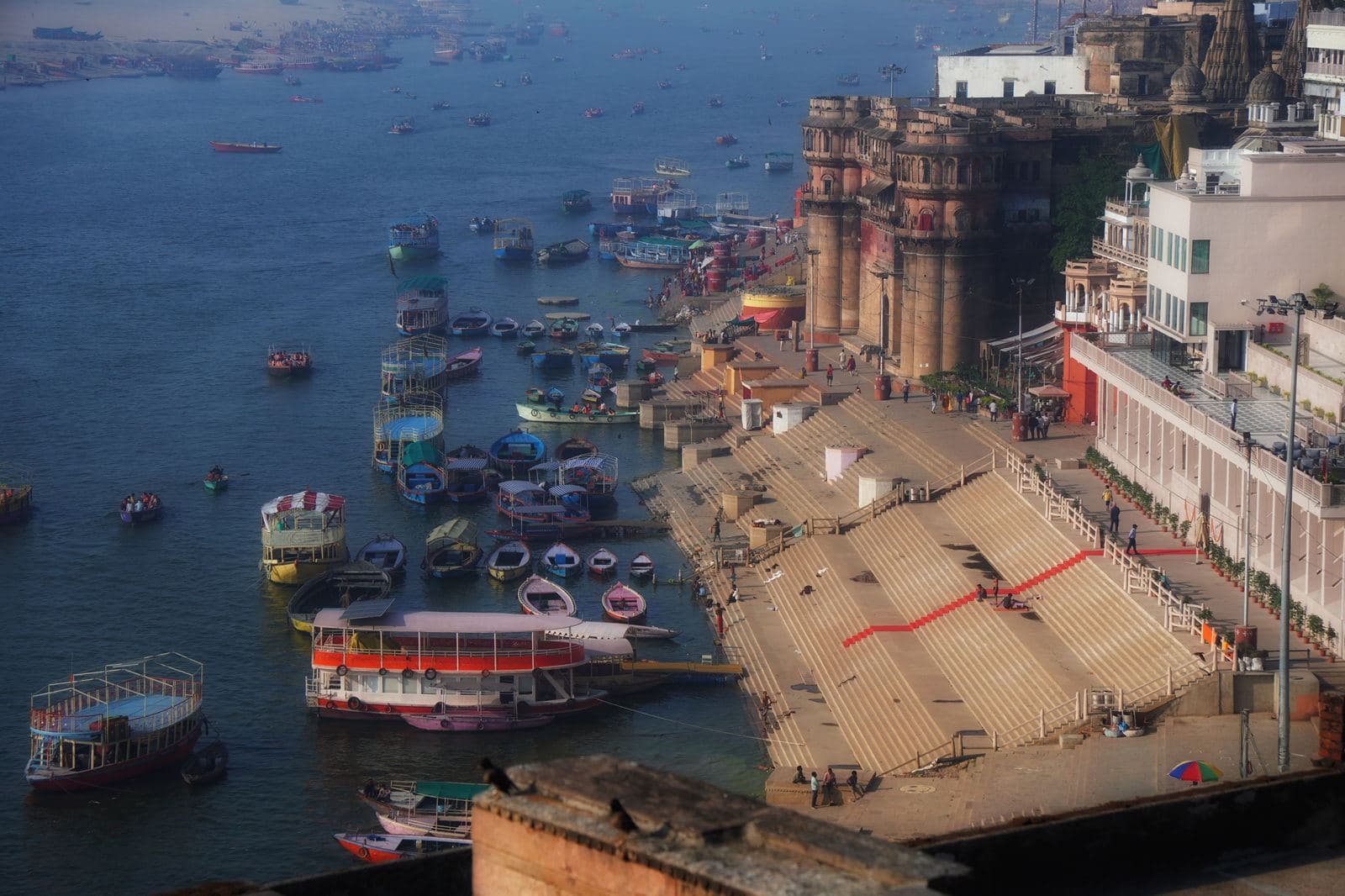
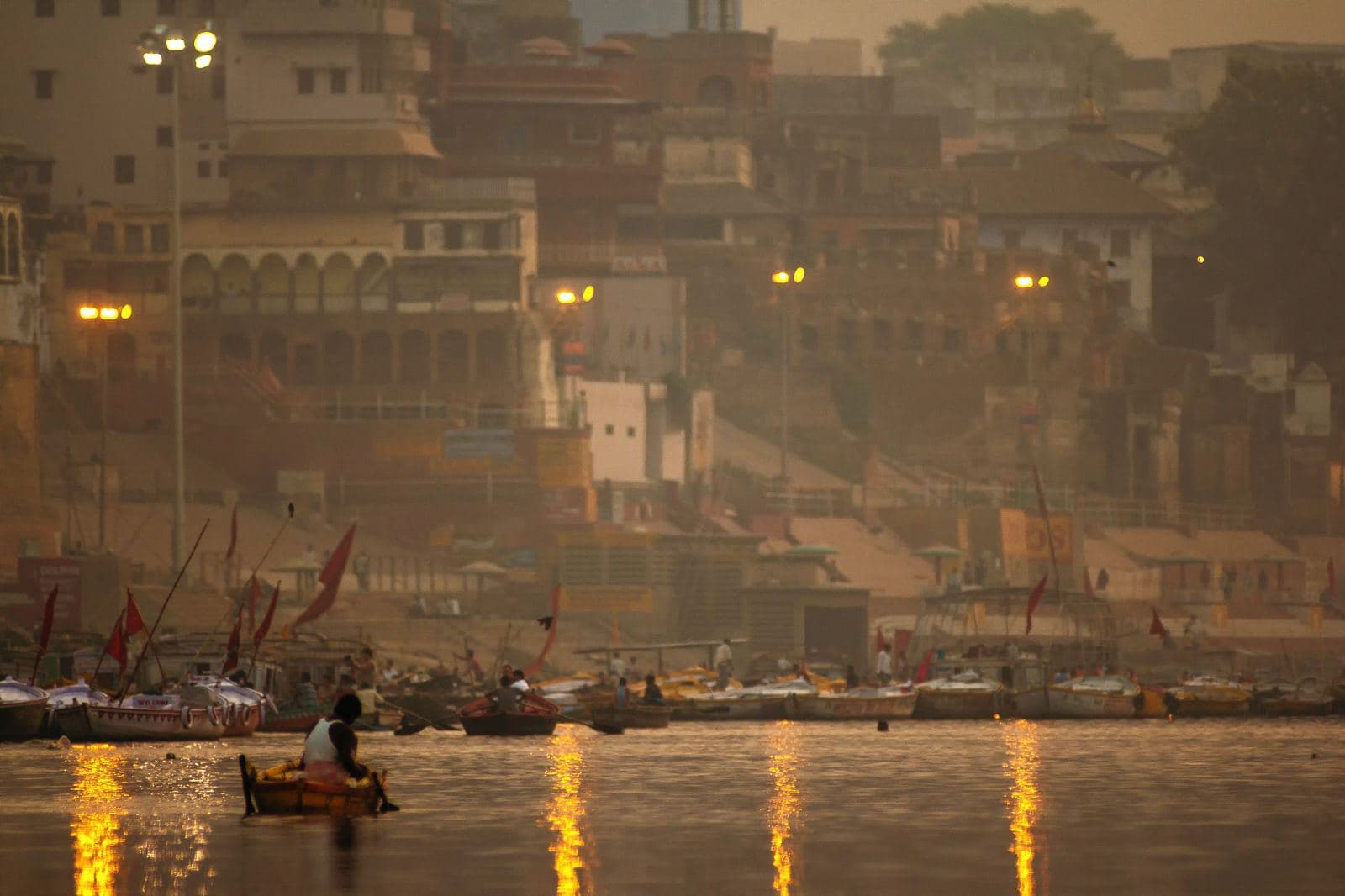
There are nights in Varanasi that feel like the rest of the year was a rehearsal for them. Dev Deepawali is the greatest of them. At dusk on the full moon of Kartik, earthen lamps are set out on every step of the riverfront, until the whole seven-kilometre crescent of ghats, from Assi in the south to Raj Ghat in the north, is drawn in a single line of fire and doubled in the water. It is the night, the city says, when the gods themselves come down to bathe in the Ganga.
It is also the most crowded night of the Varanasi year, and the one that most rewards planning. This guide covers what the festival means, how the evening unfolds, where to watch from, what it costs and how to move around a city that closes its roads for the night.
When is Dev Deepawali in 2026?
Dev Deepawali is celebrated on Kartik Purnima, the full moon of the Hindu month of Kartik, which falls about fifteen days after Diwali. In 2026 that is Tuesday 24 November. Published panchangs place the full-moon tithi from late on 23 November until the evening of the 24th, and the 24th is the day Varanasi will celebrate. Diwali itself falls on 8 November this year. Because 2026 has an extra lunar month, both festivals arrive later than they did in 2025, when Dev Deepawali fell on 5 November.
A few listings online give a different day, which happens whenever a tithi straddles two dates. If you are booking something that cannot move, such as a flight or a boat, confirm against a local panchang or with the people you are booking through.
What Dev Deepawali means
The name means the Diwali of the gods. Its oldest story belongs to Shiva. Three demon brothers, together called Tripurasura, had built three flying cities of gold, silver and iron that could only be destroyed by a single arrow when all three aligned. On the full moon of Kartik, Shiva loosed that arrow and burnt the three cities, which is why the day is also called Tripurari Purnima, the full moon of the enemy of Tripura. The gods, the story goes, celebrated by lighting lamps on the ghats of Kashi, Shiva's own city.
Underneath the spectacle are two very old devotions of the month of Kartik: the dawn bath in the river, Kartik snan, and deepdan, the offering of a lamp to the Ganga. Through the month, families light lamps for their ancestors, and some raise small lamps in baskets on tall bamboo poles, the akash deep, or lamps of the sky. Kartik Purnima is the culmination of both.
The citywide festival you will see is more recent than the rituals. Accounts differ on its beginnings: some trace the lighting of the ghats to Panchganga Ghat in the mid-1980s, others credit a local priest with starting it at Dashashwamedh in 1991. What is not in doubt is how it has grown. By official count, about 25 lakh lamps, two and a half million, were lit across the ghats in 2025.
How the night unfolds
The day starts long before the lamps. From before dawn, pilgrims come down to bathe for Kartik snan, and the ghats are busy all morning with ritual and preparation: volunteers sweep the steps, draw rangoli and set out the lamps in rows, ready to be filled and lit. By early afternoon, the police begin closing roads to the riverfront.
- Dawn to noon
- Kartik snan, the holy bath; ghats decorated and lamps laid out
- From about 2 PM
- Roads to the ghats close to vehicles; walk in from the drop-off points
- 4:00 to 4:30 PM
- Board your boat or take your place; the steps are already full
- About 5 PM
- Sunset; lamps are lit ghat by ghat along the riverfront
- About 5:30 to 7:30 PM
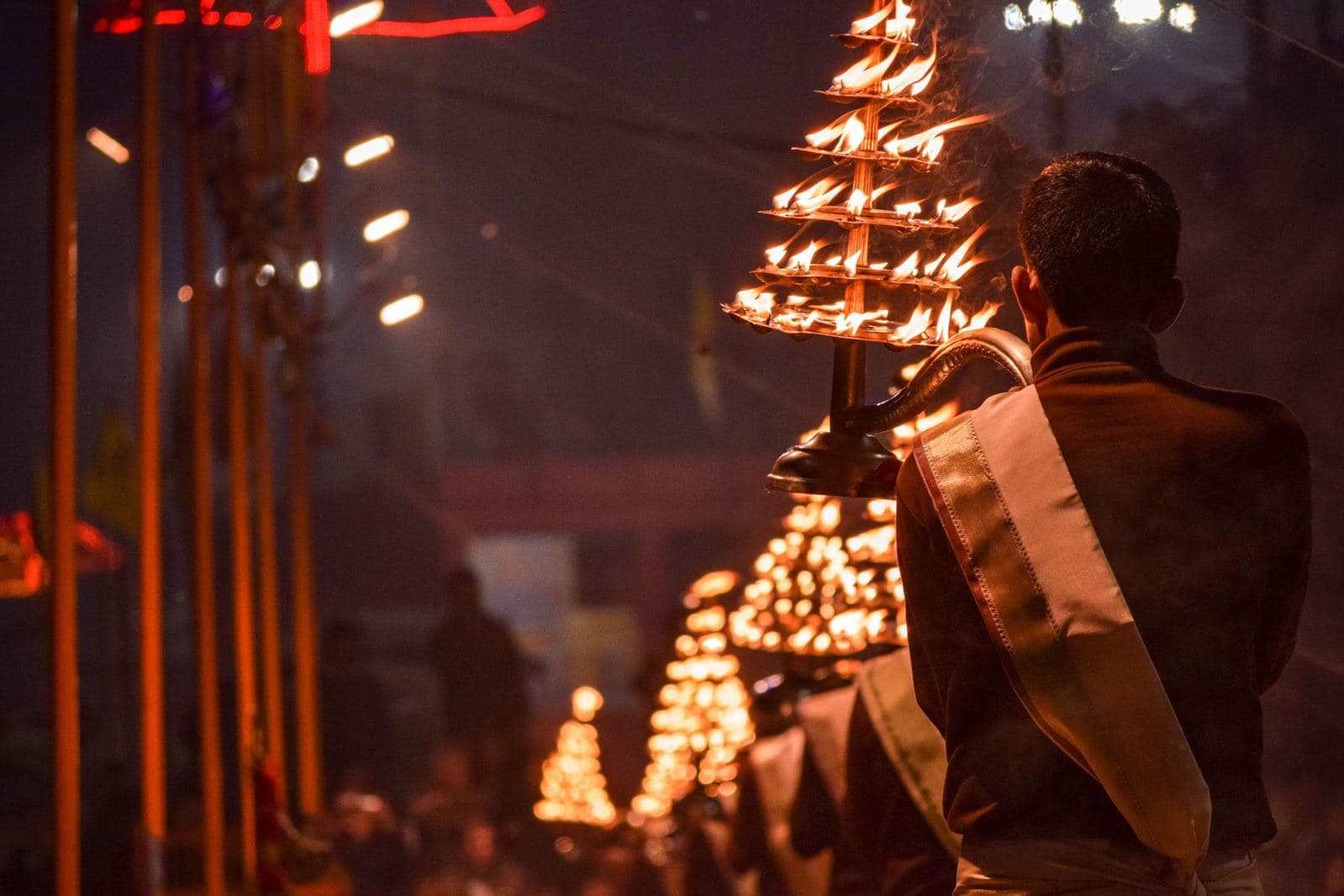
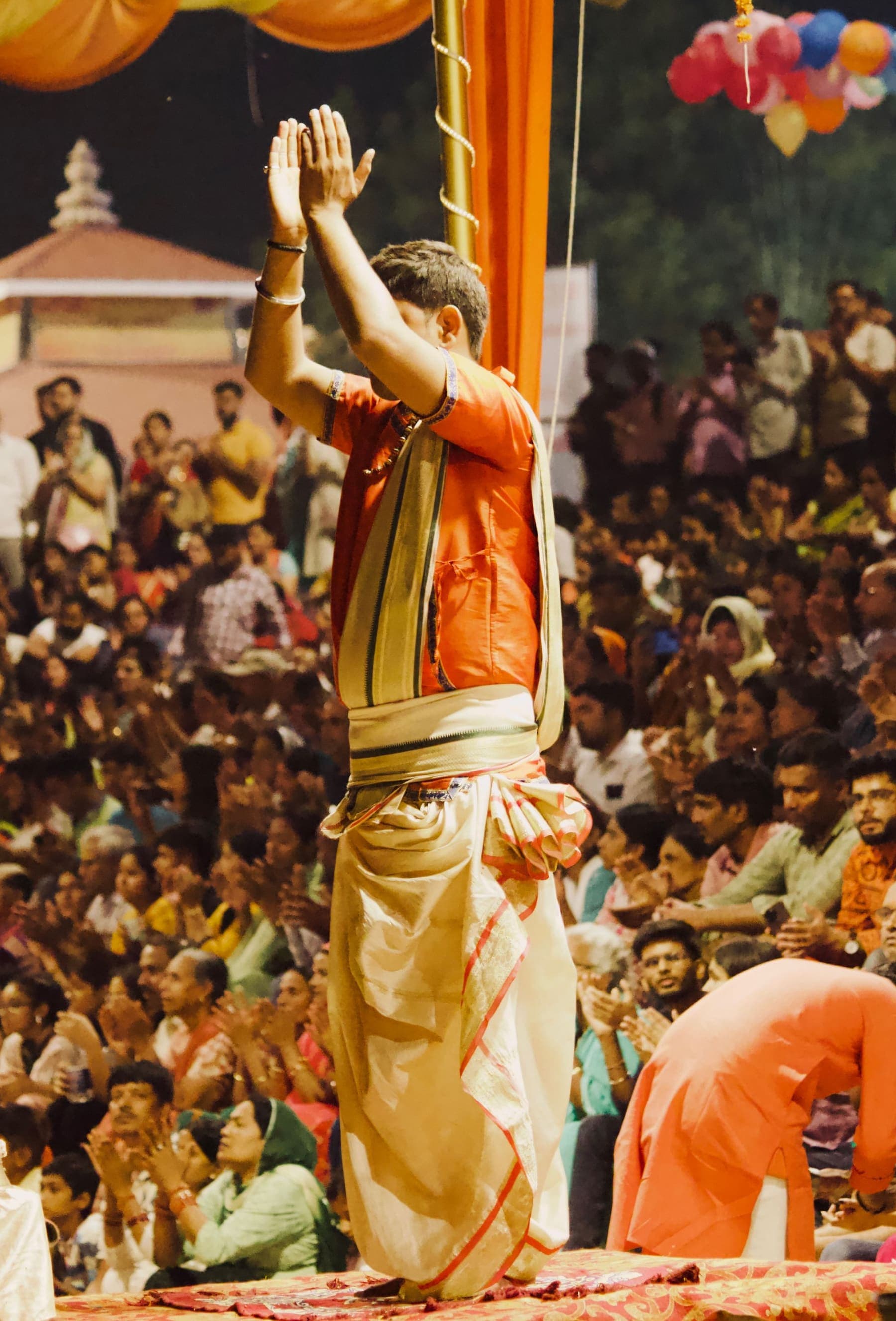
- The grand Ganga Aarti at Dashashwamedh and other ghats
- 6 to 9 PM
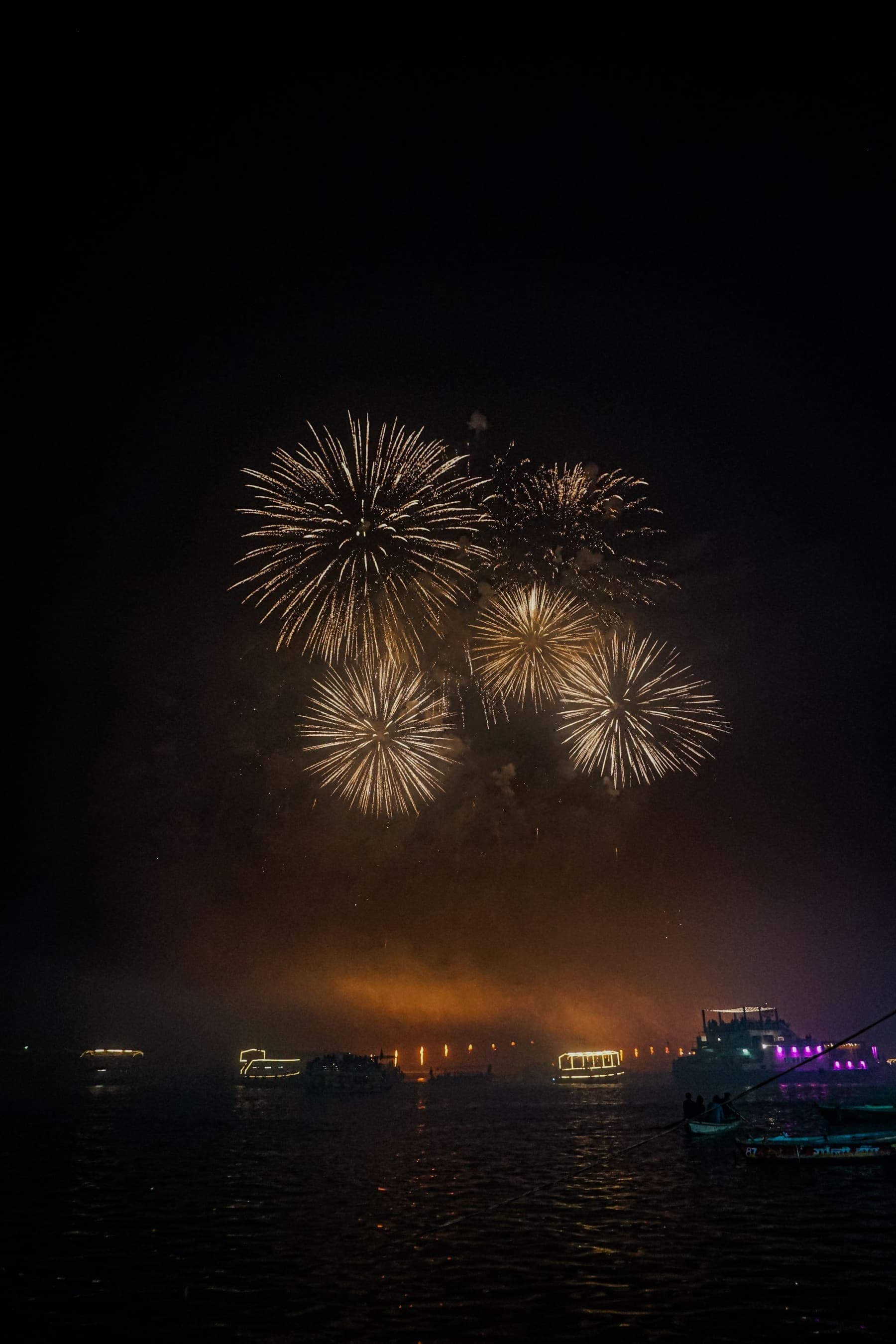
- Laser and light show at Chet Singh Ghat; fireworks over the river
- 8:30 to 9:30 PM
- Lamps burn down; crowds leave slowly through the lanes
| Time | What happens |
|---|---|
| Dawn to noon | Kartik snan, the holy bath; ghats decorated and lamps laid out |
| From about 2 PM | Roads to the ghats close to vehicles; walk in from the drop-off points |
| 4:00 to 4:30 PM | Board your boat or take your place; the steps are already full |
| About 5 PM | Sunset; lamps are lit ghat by ghat along the riverfront |
| About 5:30 to 7:30 PM | The grand Ganga Aarti at Dashashwamedh and other ghats |
| 6 to 9 PM | Laser and light show at Chet Singh Ghat; fireworks over the river |
| 8:30 to 9:30 PM | Lamps burn down; crowds leave slowly through the lanes |
Times are based on recent years and on sunset, which falls a little after 5 PM in late November. The district administration publishes the programme in the week before the festival.
In recent years the city has added to the lamps. In 2025, a three-part laser and light show was projected onto the facade of Chet Singh Ghat between about 6:15 and 8:45 PM, telling the stories of Kashi in light and sound, and a ten-minute show of green fireworks was held in front of the Kashi Vishwanath Dham ghat. Expect something similar in 2026, but treat the details as unconfirmed until the programme is announced.
“The lamps are lit in a few minutes and burn for two or three hours. Be in place by half past four, and don't plan to move.”
Where to watch from
There is no single best place, but there is a best place for you. The photographs you have seen were taken from the river, and a boat is the only way to see the whole crescent lit at once. The steps put you inside the festival, among families lighting their own lamps. Rooftops sit between the two.
- A boat on the Ganga
- What you getEvery ghat at once, reflected in the water; the Aarti and fireworks from the front
- What to knowBook weeks ahead; insist on a licensed boat with life jackets
- Dashashwamedh steps
- What you getThe grandest Aarti, close up
- What to knowThe most crowded place in the city; arrive by early afternoon
- Assi and the southern ghats
- What you getLamps, local families, more room to move
- What to knowYou see one stretch, not the whole riverfront
- A rooftop on the ghats
- What you getA wide view without the crush
- What to knowMost are reserved for hotel guests or sold as packages
- Ramnagar Fort (Akashganga)
- What you getMusic, Kathak and the river from the far bank
- What to knowBy pass only; usually paired with a cruise
| Where | What you get | What to know |
|---|---|---|
| A boat on the Ganga | Every ghat at once, reflected in the water; the Aarti and fireworks from the front | Book weeks ahead; insist on a licensed boat with life jackets |
| Dashashwamedh steps | The grandest Aarti, close up | The most crowded place in the city; arrive by early afternoon |
| Assi and the southern ghats | Lamps, local families, more room to move | You see one stretch, not the whole riverfront |
| A rooftop on the ghats | A wide view without the crush | Most are reserved for hotel guests or sold as packages |
| Ramnagar Fort (Akashganga) | Music, Kathak and the river from the far bank | By pass only; usually paired with a cruise |
If you watch from a boat
Boats range from shared rowing boats to large motor launches carrying forty or more people. For 2026, operators are already listing shared places from about ₹4,000 per person, with private boats costing many times that; prices rise steeply as the date approaches, and on the day, if any boat is free at all, you will pay whatever is asked. Before you pay, agree in writing the boarding ghat, the boarding time, how long you will be on the water and whether the boat will stop for the laser show at Chet Singh Ghat.
If you watch from the ghats
Pick one ghat and stay there; moving along the riverfront after dark is slow and, on the narrowest stretches, not safe. Dashashwamedh and the ghats around Kashi Vishwanath are the most crowded. Assi, Tulsi and the ghats beyond Panchganga are easier. Wherever you are, you can buy a leaf-cup diya on the steps and float it on the river yourself, which is the oldest part of the festival and the part most visitors forget.
Getting around on the day
The roads leading to the riverfront are closed to vehicles from the afternoon, and cars and autos drop passengers at points on the edge of the old city such as Godowlia, Lanka and Raj Ghat. From there you walk, sometimes a kilometre or more, through lanes that grow denser as dusk approaches. Movement on the river is controlled too: in past years the administration has restricted the number and kind of boats allowed out, and the city is declared a no-fly zone, so drones are not permitted.
- Leave early. Whatever time you think you need, add an hour.
- Agree a meeting point with your group before you set out, in case you are separated; phone networks are often overloaded.
- Wear shoes with grip. The steps are steep, crowded and slick with oil from the lamps.
- Carry little. Water, small change, a warm layer for the river, your phone and an ID. Leave valuables at the hotel.
- Eat before you go. Food stalls near the ghats are mobbed, and you will not want to leave your place.
Where to stay, and when to book
Hotels on or near the ghats are the first to sell out, often months ahead, and prices for the festival nights are far above the usual. If you can stay within walking distance of the river, between Assi and Dashashwamedh, you avoid the road closures entirely. Otherwise, choose a hotel near one of the drop-off points and plan to walk. Trains into Varanasi in the week of Dev Deepawali are heavily booked, and flights rise in price; book them as soon as your dates are fixed.
Making a trip of it
A good Dev Deepawali trip is three days: one to arrive and see the city before the crowds, the festival day itself, and a morning after for the quiet. Use the first evening for the regular Ganga Aarti, so you have seen it at its usual scale, and the morning after for a sunrise boat ride. If you have more time, add Sarnath.
Our own Dev Deepawali 2026 journey is built around the festival over two nights and three days: the Akashganga festival at Ramnagar Fort in the afternoon, with music, Kathak and a hi-tea, followed by a four-hour private cruise past all 84 ghats while the lamps are lit, with dinner after. It is a small group with fixed dates, and it sells out.
Questions people ask
- What is the date of Dev Deepawali 2026?
- Tuesday 24 November 2026, on Kartik Purnima. A few listings give another day, so confirm against a local panchang before booking anything that cannot move.
- What time are the lamps lit on Dev Deepawali?
- At dusk, from about 5 PM, and they burn for two to three hours. Aim to be on your boat or at your place on the ghats by 4:30 PM.
- How much does a boat cost on Dev Deepawali?
- For 2026, operators list shared places from about ₹4,000 per person, and private boats cost many times more. Prices rise steeply close to the date, so book early and agree the details in writing.
- Is it better to watch Dev Deepawali from a boat or the ghats?
- A boat shows the whole lit riverfront at once and keeps you out of the crush on the steps. The ghats put you among the families lighting lamps. If you can, do both: arrive on the steps early, then board a boat at dusk.
- Are roads closed in Varanasi on Dev Deepawali?
- Yes. Roads to the ghats close to vehicles from the afternoon, and you walk in from drop-off points such as Godowlia, Lanka and Raj Ghat. Drones are not allowed.

About this guide
Written for the WanderMate Journal by our team in Varanasi, where we plan and run journeys along the Ganga. We check facts against official and published sources, listed below, and revise guides when timings, prices or dates change. Last updated 14 October 2026.
Spotted something out of date? Tell us.
Sources