Every evening at Dashashwamedh Ghat, priests offer fire, incense and song to a river they revere as a goddess. Here is what you are watching, and how to watch it well.
Aarti is one of the oldest gestures in Hindu worship: a flame is waved in slow circles before the divine, as an offering of light. In most temples it is performed for an image of a deity. On the ghats of Varanasi, it is performed for the river itself — for Ganga, who is worshipped as a goddess and a mother.
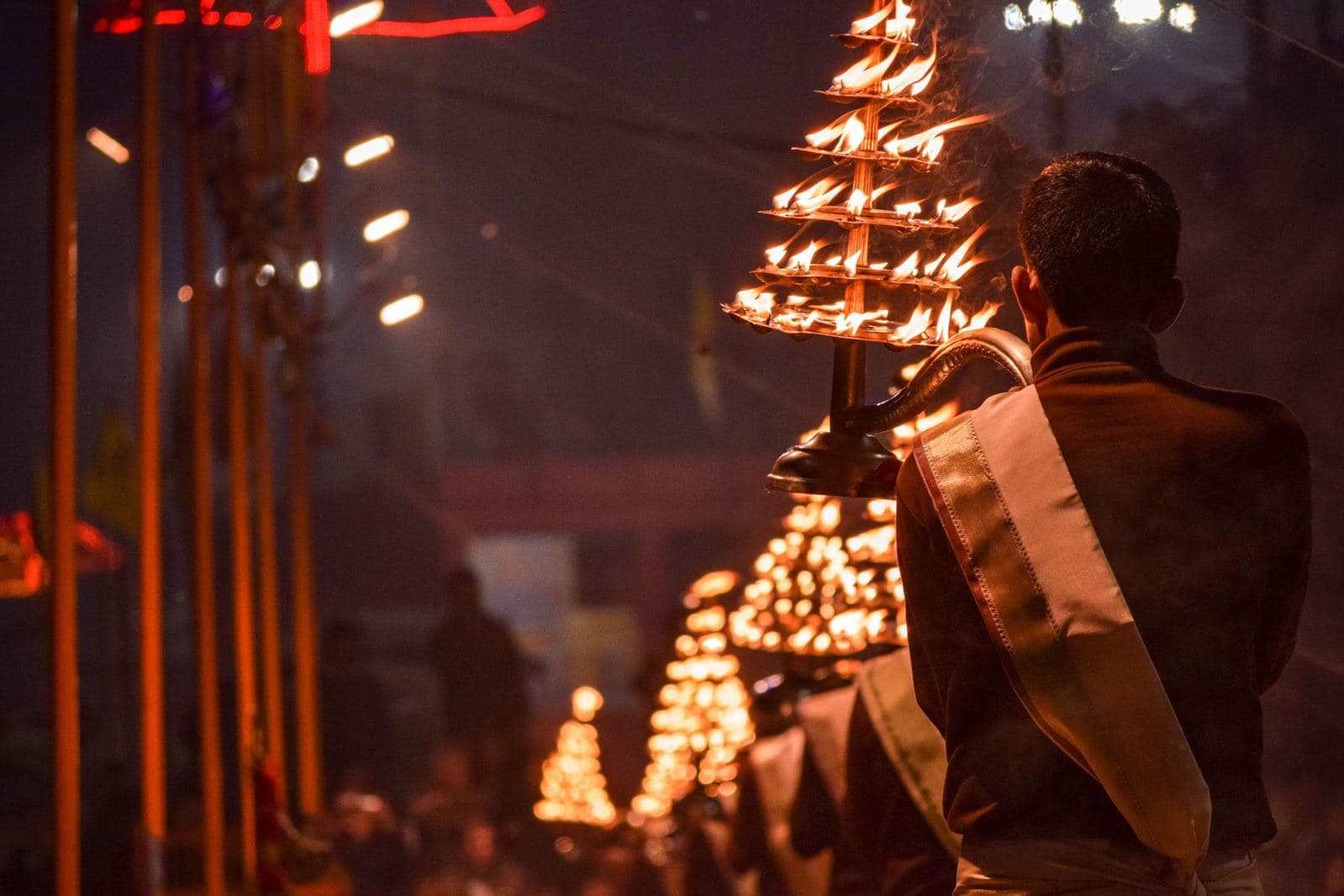
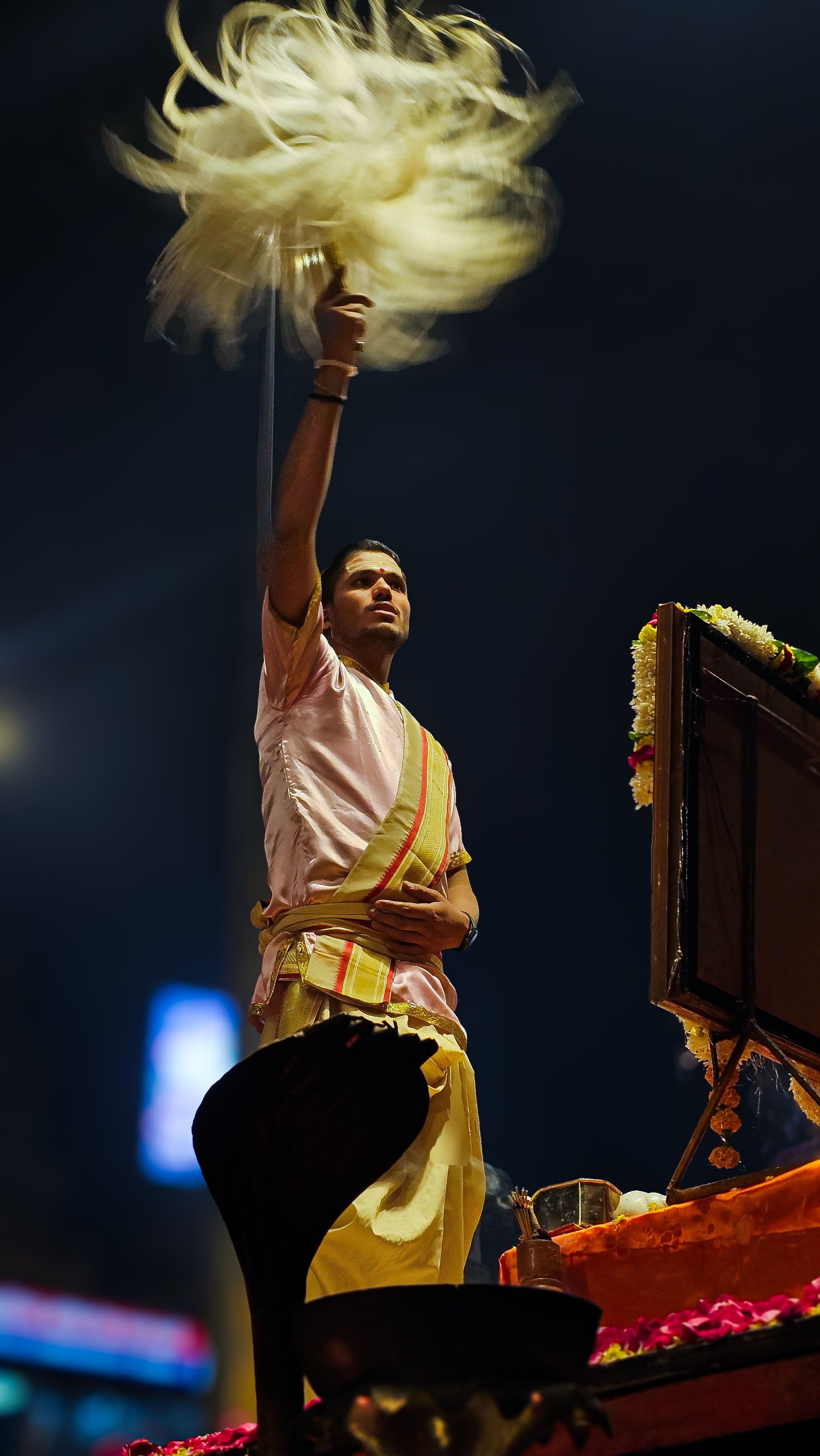
As the sun goes down, a row of young priests takes its place on wooden platforms at the water's edge. They move in unison, to the sound of bells, conch shells and devotional song, offering each element in turn.
What happens, step by step
The ceremony opens with the blowing of the conch. Incense is offered first, its smoke drawn in wide arcs over the river. Then come the lamps — heavy brass stands with many tiers of flame, lifted and turned so that the fire seems to pour through the dusk. Flowers are offered, and the yak-tail whisk and fans are waved, as one would honour a royal guest.
“The offering is not made to the crowd on the steps. It is made to the river — the crowd is simply allowed to watch.”
Through all of it, the priests face the water. When the final lamps have been offered, many in the crowd float small leaf-cups of flowers and a single diya onto the river, so that the Ganga carries their prayer downstream.
How to watch it well
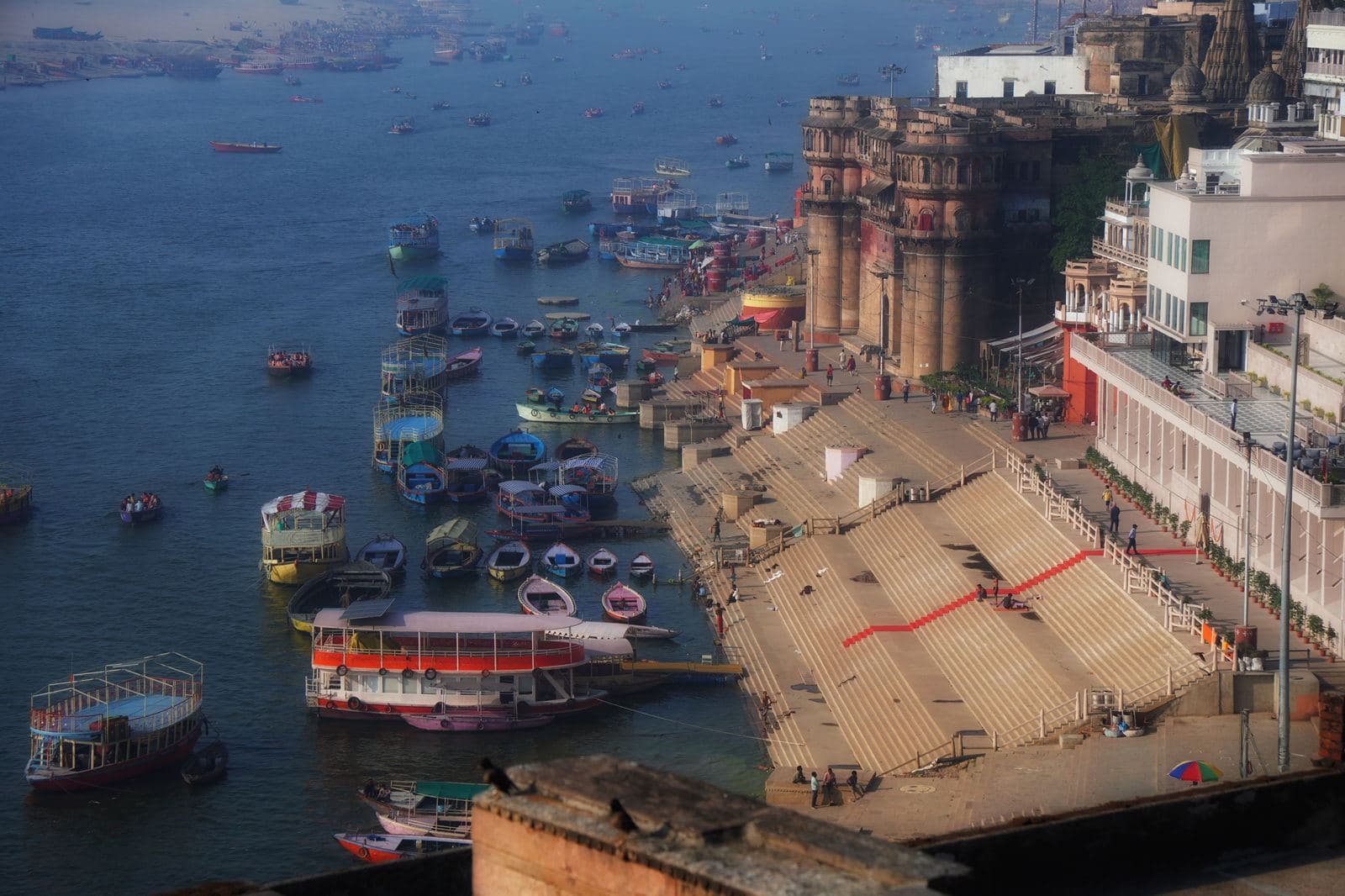
Arrive early — the steps fill quickly, especially at weekends and in the festival season. Watching from a boat gives you the whole sweep of the ceremony and the lit city behind it; watching from the steps puts you among the people who come here every night. Dress modestly, keep flash photography off, and stay until the end, when the lamps are offered to the river and the crowd slowly disperses into the lanes.
If the evening Aarti is theatre, the dawn ceremony at Assi Ghat, Subah-e-Banaras, is its quieter sibling: chanting, music and yoga as the light comes up over the far bank.

About this story
Written for the WanderMate Journal by our team in Varanasi, where we plan and run journeys along the Ganga. We check facts against official and published sources, listed below, and revise guides when timings, prices or dates change.
Spotted something out of date? Tell us.