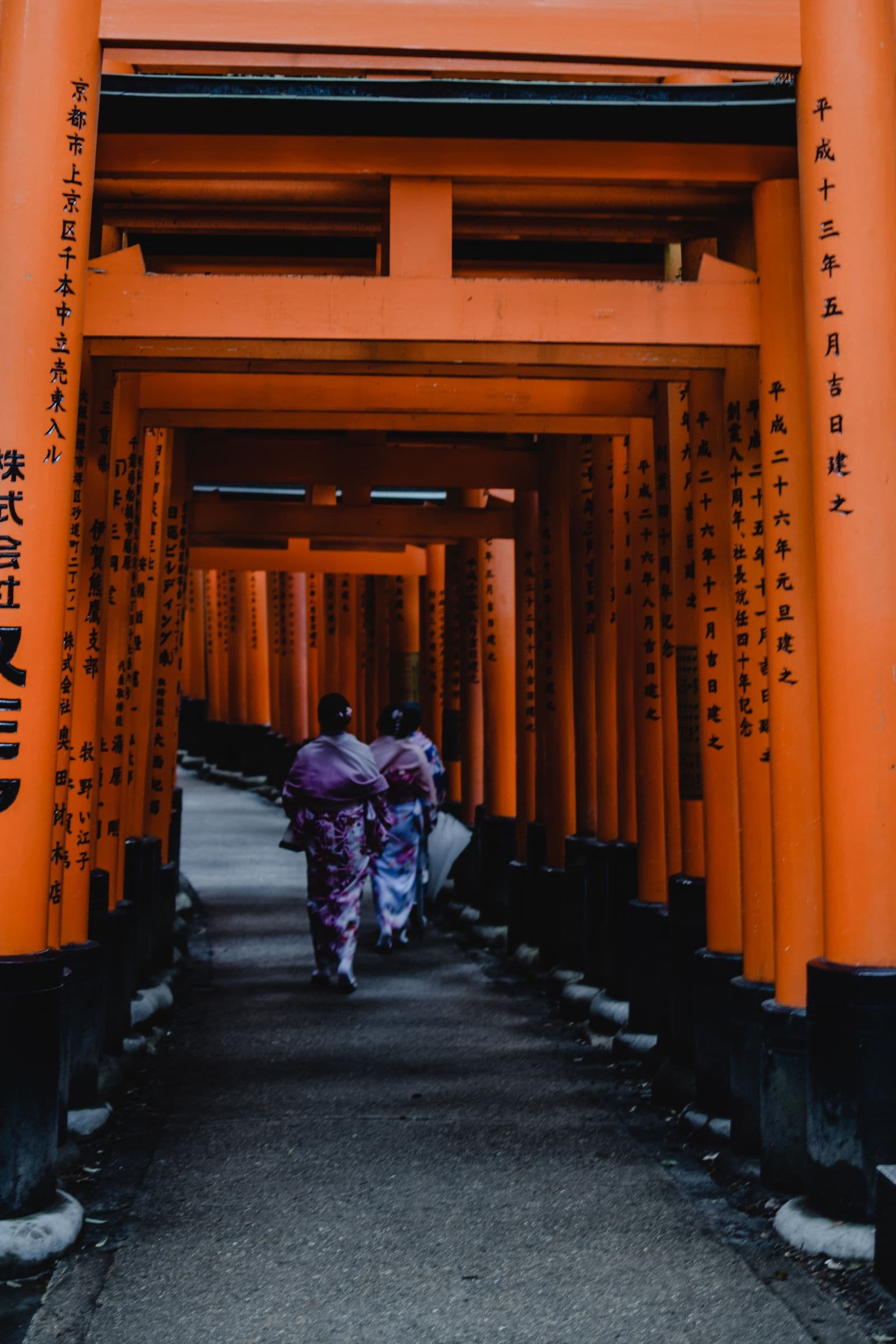
Thousands of vermilion torii climb a hillside in Kyoto, each one given by a person or a business. An introduction to Inari, the kami of rice.
In Shinto, Japan's native faith, kami are the spirits of nature, places and ancestors. Inari is the kami of rice — and so of harvest, prosperity and, in modern Japan, of business. Fushimi Inari Taisha, in the south of Kyoto, is the most important of the many thousands of Inari shrines across the country, and was founded in 711.
Why the gates?
A torii marks the passage from the everyday world into a sacred one. At Fushimi Inari, thousands of them line the paths up Mount Inari, so close together in places that they form tunnels of vermilion. Each one is a gift, donated by an individual or a company in gratitude or hope; turn around as you climb, and you will see the donor's name and the date painted on the back.
“Walking up, you see only the gates. Walking down, you see the names — a mountain of thanks.”
The foxes
Stone foxes, kitsune, guard the shrine. They are Inari's messengers, and many hold a key in their mouths — the key to the rice granary. Small fox-shaped votive plaques, painted with faces by visitors, hang in clusters along the way.
Go early. The lower gates are crowded by mid-morning, but the higher you climb, the quieter it becomes — and the city opens out below you through the trees.

About this story
Written for the WanderMate Journal by our team in Varanasi, where we plan and run journeys along the Ganga. We check facts against official and published sources, listed below, and revise guides when timings, prices or dates change.
Spotted something out of date? Tell us.